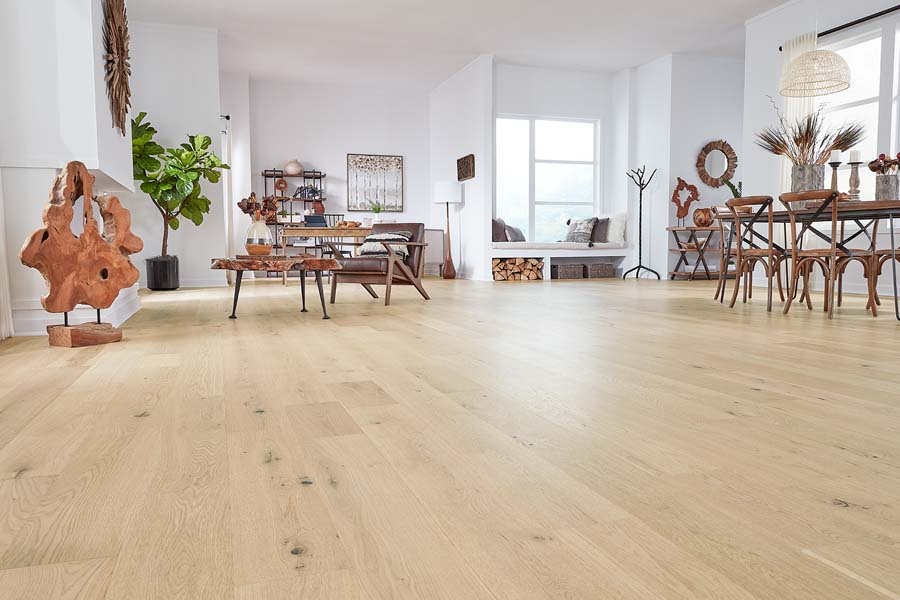
About Hardwood: The Central Missouri Buyer's Guide
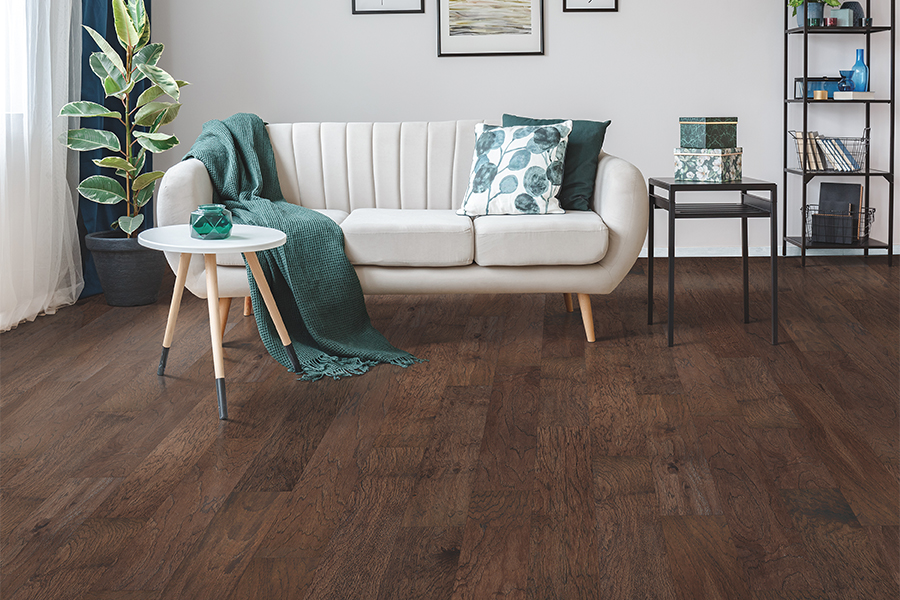
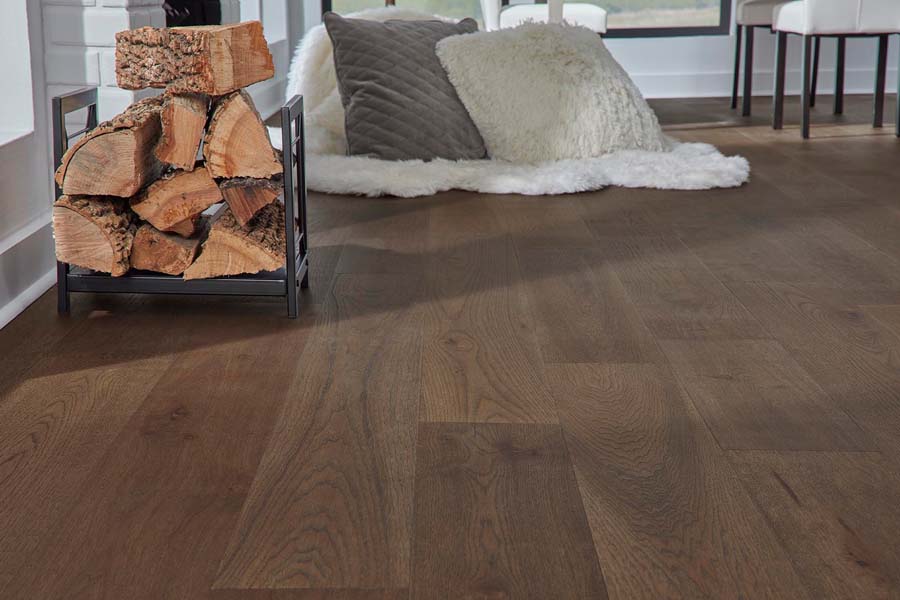
Nothing else ages like a real wood floor. Where most flooring slowly wears out, hardwood wears in: the color deepens, the grain settles, and a floor you put down this year can still be underfoot, and still beautiful, decades from now. Carpet Values stocks solid and engineered hardwood at our Kingdom City showroom, and our team installs it in homes across central Missouri. Browse our hardwood collection when you want to see real samples in person, or get a free estimate to price your rooms.
Solid and Engineered Hardwood, Explained
Hardwood comes in two builds, and the right one depends on where the floor is going. Solid hardwood is a single piece of wood, usually three-quarters of an inch thick, that can be sanded and refinished many times across its life. Engineered hardwood is a genuine wood veneer bonded over a cross-layered plywood or high-density core. The surface is the same species you would get in solid, but the layered core underneath holds its shape far better when humidity rises and falls.
That difference decides a lot. Solid hardwood shines in main-floor rooms with steady conditions, and its thickness means you can refresh it again and again. Engineered hardwood goes places solid should not: over a concrete slab, in a finished basement, or in any room where seasonal moisture swings would make a solid plank cup or gap. Both are real wood on top, so from a standing height you cannot tell them apart.
There is also a practical difference in how each one installs. Solid boards are typically nailed down to a wood subfloor and need time to acclimate to your home before they go in. Engineered planks are more flexible, installing by nail, glue, or as a floating floor depending on the product and the room, which is part of why they open up so many more spaces. Neither is better across the board; the right pick is the one that matches where the floor is going and how long you want to keep it.
Request a quote
Why Hardwood Works in Central Missouri Homes
Wood is a natural material, so it moves with the weather, and central Missouri gives it plenty to react to. Humid summers swell the boards and dry winters shrink them back, and that yearly cycle is exactly what a well-chosen, well-installed floor is built to handle. Engineered construction takes the guesswork out of the wetter, less stable spots, while solid hardwood rewards the stable, climate-controlled rooms where most families spend their time.
The payoff is a floor that fits how homes here actually live. It stands up to mud season and pets, it wipes clean, and it carries the warm, timeless look that suits everything from a farmhouse outside Fulton to a newer build along the I-70 corridor. Get the species, build, and installation right for your space, and the floor rewards you for a very long time.
How Long Does Hardwood Flooring Last?
A properly installed hardwood floor can last for generations, which is what sets it apart from nearly everything else you can put down. The reason is simple: hardwood can be refinished. When the surface finally looks tired, a solid floor is sanded back to fresh wood and re-coated, and it looks new again without being torn out. Most other floors have one life; when they wear, they get replaced.
Solid hardwood can take that refinishing many times over the decades. Engineered hardwood can be refinished too, though how often depends on the thickness of its wear layer, so a thicker veneer buys you more resurfacing down the road. Either way, you are buying a floor measured in decades, not years.
Reading a Hardwood Floor Like a Pro
A few specs tell you most of what you need to know before you fall for a sample:
- Species and hardness. Oak, hickory, and maple are the workhorses. Hardness is measured on the Janka scale, and a harder species like hickory dents less under chairs, heels, and dog nails, which matters in a busy household.
- Solid vs. engineered. Decide this by the room, not by price alone: engineered for basements, slabs, and moisture-prone spaces; solid for the main-floor rooms you want to refinish for the long haul.
- Prefinished boards arrive sealed from the factory, so the floor is ready to walk on the day it goes in. Site-finished floors are sanded and coated in your home, which lets you match a custom color at the cost of a longer, dustier process.
- Plank width and grade. Wide planks read modern and calm; narrower strips read traditional. Cleaner grades show even color, while character grades keep the knots and streaks that give a floor personality.
- Wear layer, on engineered. The veneer thickness is what determines how many times an engineered floor can be refinished, so it is worth asking about when you compare products.
Finishes and Textures That Change the Look
Two hardwood floors in the same species can feel completely different depending on their finish and surface texture, and this is where a lot of the personality lives. The sheen sets the mood: high-gloss floors look formal and reflect light but show every scuff and dust bunny, satin and matte finishes hide daily wear far better and suit a busy household, and most homes land somewhere in the low-sheen middle for good reason.
Texture matters just as much. A smooth, sanded surface reads clean and contemporary. Wire-brushed floors have the soft grain raised and the surface lightly scored, which hides scratches and footprints and gives the wood a lived-in feel. Hand-scraped boards take that further with a rustic, sculpted surface that suits farmhouse and traditional rooms. If you have pets or heavy traffic, a lower sheen and a textured surface will keep the floor looking good between cleanings, which is worth weighing before you fall for a glossy sample under showroom lights.
Hardwood vs. Luxury Vinyl and Laminate
The honest answer is that the best wood look for a room is not always wood. Hardwood is the real material: refinishable, long-lived, and the surface buyers still prize most when they walk a house. What it does not love is standing water, so a full bath, a laundry room, or a flood-prone basement is asking for trouble.
That is where the alternatives earn their place. If you want a wood look somewhere wet or hard-used, waterproof luxury vinyl shrugs off spills, kids, and pets, though it cannot be refinished and will not add the same long-term value. For a budget-friendly wood look in a dry room, laminate gives you tough, scratch-resistant surfaces at a lower price. Pick hardwood when you want the genuine article and the decades of life that come with it, and lean on the look-alikes where moisture or budget makes them the smarter call.
Where Hardwood Belongs, Room by Room
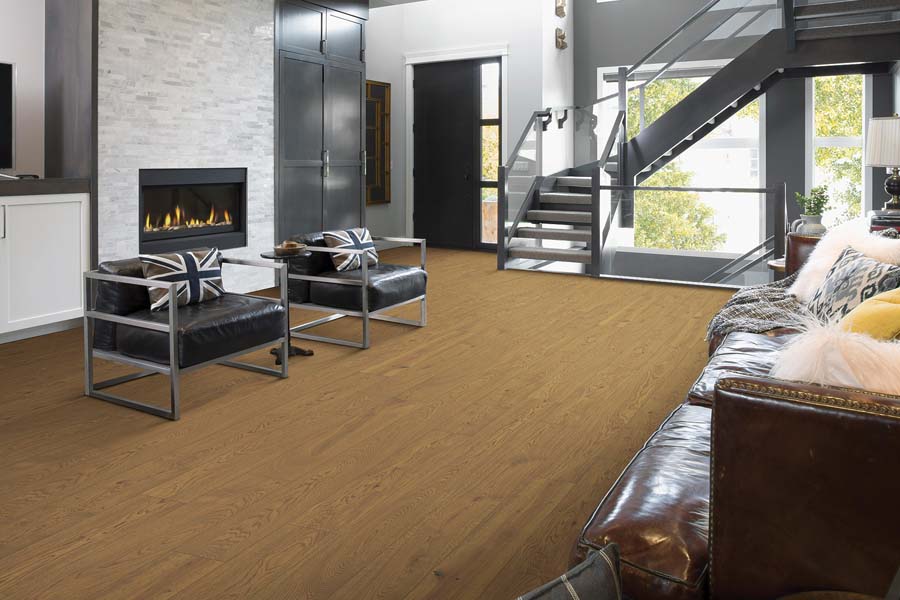
Hardwood is at home in the rooms that set the tone of a house: living and dining rooms, bedrooms, hallways, stairs, and open main-floor plans where one continuous floor makes the whole level feel bigger. Kitchens work well too when you choose engineered and wipe up spills promptly. The rooms to skip are the consistently wet ones, such as full bathrooms, laundry rooms, and below-grade basements, where a waterproof floor is the wiser choice.
Wood floors do run cooler and louder than carpet, and both are easy to manage. A few well-placed rugs soften the sound and take the chill off a January morning, and our guide to warming up hard floors with area rugs walks through how to do it without hiding the floor you paid for. If you want to go deeper on species, finishes, and care, our Hardwood 101 hub keeps the learning in one place.
What Hardwood Flooring Costs
Hardwood is priced by the project, not by a single number on a sample, because several things move the total. Species and grade matter, solid usually costs more than engineered, and wider planks and site-finished floors add to both material and labor. Then there is the work under the surface: removing the old floor, prepping and leveling the subfloor, and any stairs or tricky transitions the job includes. A simple open room installs differently than a house full of doorways and closets.
Because we buy in bulk and pass the savings along, you get real hardwood without a big-box markup, and financing is available to spread a larger project across manageable payments. The dependable way to get a number is to measure the actual rooms, so a quote beats an estimate off a chart every time.
Installation and Everyday Care
Hardwood is a floor worth installing right, because most of what determines its lifespan happens before you ever see the finish. The wood needs to acclimate to your home, the subfloor has to be flat and dry, and the boards need proper fastening and expansion room so the floor can move with the seasons without buckling. Our project specialists measure the space and handle the install, and getting those fundamentals right is the difference between a floor that lasts and one that complains within a year.
Care is refreshingly simple. Sweep or vacuum the grit that scratches, clean with a damp mop rather than a wet one, put felt pads under furniture, and lay walk-off mats at the doors that catch the worst of Missouri's mud and salt. When the finish eventually wears, a solid floor can be sanded and re-coated instead of replaced. It is also worth knowing how your flooring warranty works, since coverage often depends on professional installation and proper maintenance.

See Hardwood in Person
The fastest way to choose a floor is to stand on it. Our 40,000-square-foot Kingdom City showroom lets you compare species, widths, and finishes side by side, and you can read what local customers say about working with us. When you are ready, stop by the showroom or request a free estimate and we will help you find the hardwood that fits your home, your traffic, and your budget.
Request a quoteFeatured Hardwood
Hardwood Flooring FAQs
Yes. Engineered hardwood has a genuine hardwood veneer on top, bonded over a stable plywood or high-density core. The surface is the same species and finish you would get in a solid plank, so it looks and feels like wood because it is wood. The layered construction simply makes it more stable in humidity.
Yes, especially engineered hardwood, as long as spills get wiped up promptly. Kitchens see water and traffic, so the more forgiving build and a durable finish go a long way. In rooms with standing water, such as full bathrooms and basements, a waterproof floor is the better fit.
Solid hardwood can be sanded and refinished many times over its life, which is why it lasts for generations. Engineered hardwood can be refinished as well, but the number of times depends on how thick its wear layer is, so ask about veneer thickness when you compare engineered products.
Match the build to the room. Choose engineered for basements, concrete slabs, and any space where humidity swings, because its layered core stays put. Choose solid for stable, main-floor rooms you plan to keep and refinish for decades. Many central Missouri homes end up using both.
It typically does. Real wood is one of the surfaces buyers consistently look for, and a durable, refinishable floor reads as a lasting upgrade rather than something the next owner will want to replace. That resale appeal is part of why hardwood remains a favorite.
Choose hardwood when you want the genuine material and the decades of refinishable life it brings. Choose laminate for a tough, budget-friendly wood look in a dry room. Choose luxury vinyl when you want a waterproof wood look for a bathroom, basement, or hard-used space. Seeing all three side by side in the showroom makes the choice easy.
Yes. Residential installation is one of our services, and our project specialists will measure your rooms, help you choose the right product, and handle the install. Proper installation also protects your warranty, so it pays to have it done right.
Reimagine your space
Get inspired with our beautiful flooring galleries