

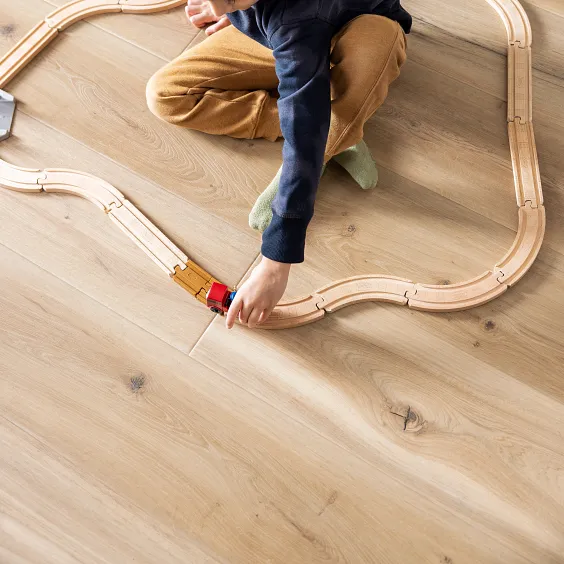
If you live in a multi-level home—split level, two-story, or even a finished basement—you’ve probably thought about sound more than once. Footsteps, the dog racing down the hall, chairs sliding… it all echoes more than you expect. The good news is you can absolutely choose a hard-surface floor like vinyl and still keep your home feeling warm and quiet.
In this post, we’ll cover what actually makes floors feel quieter (and what doesn’t), how to pair luxury vinyl with the right underlayment, and where area rugs make the biggest difference.
What causes “loud floors” in the first place
Sound comes from impact (feet, toys, chairs) and it travels through the structure of your home. Hard surfaces can reflect sound more than carpet, especially if the subfloor is uneven or the floor system isn’t well supported.
That’s why the best solution usually isn’t just “buy a thicker floor.” It’s a combination of proper prep, the right underlayment (when appropriate), and smart soft-surface zones like rugs.
Underlayment 101: the part nobody sees (but everyone feels)
Underlayment can help with comfort and sound, but it has to match the product you choose. Some vinyl products include an attached pad. Others require a specific underlayment, and the wrong one can actually cause issues—like a floor that feels bouncy or doesn’t lock properly.
When you’re comparing options, bring your “real life” details: is this over a basement? Is it on a second floor? Do you have pets? Our team can guide you through that decision-making through our flooring services.
Luxury vinyl vs. sheet vinyl for sound control
In general, plank-style luxury vinyl can feel more premium underfoot and gives you a lot of design flexibility. With the right build and installation, it can also feel quieter than you might expect.
Sheet vinyl is a different kind of comfort. Because it’s continuous, it can feel a little softer and it’s often a great choice in basements, laundry rooms, or any space where you want easy cleanup and fewer seams.
Where area rugs do the most work (and still look intentional)
If your goal is a quieter home, rugs are your best “soft landing” tool. Put them where impact happens: under dining chairs, at the bottom of stairs, and in the main living room walkway.
The key is sizing. A rug that’s too small looks accidental and doesn’t help much. A properly sized area rug anchors furniture and reduces sliding and scuffing at the same time.
Basement floors in Jefferson City: comfort + moisture awareness
Finished basements are popular because they give you extra living space—but basements also have their own moisture reality. Vinyl is often a smart choice because it handles humidity better than many wood-based surfaces.
If your basement doubles as a hangout room, a large rug can make it feel warmer without turning cleaning into a chore. Our inspiration gallery has plenty of examples of how people layer rugs over hard floors without making the room feel heavy.
Small upgrades that make vinyl feel quieter (without redoing the whole house)
You don’t need a full remodel to make a noticeable difference. A few small add-ons can change how your floors sound and feel:
• Felt pads under chairs and tables (seriously—this is huge).
• A runner in high-traffic hallways to soften impact.
• Door mats inside and outside the entry to catch grit that can cause scratching.
• Soft-close bumpers on cabinets if your kitchen echoes.
These little changes protect your vinyl and make your whole home feel calmer. We can help you choose rugs and runners that work with your layout when you browse our area rug selection.
A quick checklist before you commit
Before you choose your floor, ask yourself: What rooms do you want quieter? Where does moisture show up? Do you want one look through the whole level? Once you answer those questions, the right vinyl choice usually becomes obvious.
And if you want help turning those answers into a real plan, we’re happy to walk you through it in person at our showroom.
Ready to take the next step?
Want a quieter, easier-to-live-with floor plan for your Jefferson City home? Start with a free estimate, then visit our showroom location to compare vinyl options and underlayment-friendly choices. If you’d like to see what other homeowners said after their project, check out our reviews—then we’ll help you build a plan that looks great and feels good underfoot.


